 TouchéGet the app
Five years into a ten-year plan, the OED had reached "ant"
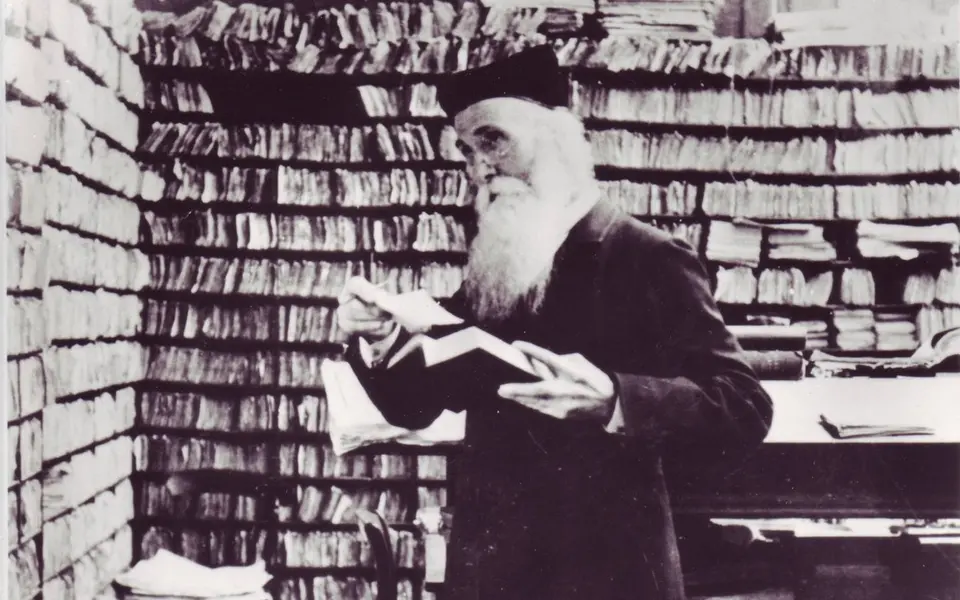
In 1879 Oxford University Press signed up James Murray to edit a new dictionary of English: four volumes, finished in ten years.
In 1857 a few members of the Philological Society in London set up an "Unregistered Words Committee" to collect words that English dictionaries left out or defined badly. They soon realized the missing words would outnumber the ones already listed. In January 1858 the society decided on a whole new dictionary, built on quotations. Volunteer readers would each take particular books and copy out passages showing how words were used, on slips of paper.
The first editor, Herbert Coleridge, kept 100,000 slips in a grid of 54 pigeonholes. He published sample pages in April 1861 and died of tuberculosis later that month, aged 30. His successor, Frederick Furnivall, recruited more than 800 volunteer readers, but many lost interest and many slips went missing. After 21 years he handed nearly two tons of slips to the next editor.
That was James Murray, a Scottish schoolmaster teaching at Mill Hill School. On March 1, 1879, he signed an agreement with Oxford University Press. The dictionary was to fill four volumes and take ten years.
Murray built a corrugated-iron shed in the school grounds, called it the Scriptorium and lined it with 1,029 pigeonholes. Furnivall's slips, he found, favored rare and curious words: there were ten times as many quotations for abusion as for abuse. He appealed through newspapers for "as many quotations as you can for ordinary words." By 1880 a thousand slips a day were arriving, and there were two and a half million of them.
The Arabic word behind "sofa" first named what?
WhySofa comes from Arabic suffa, a long seat of stone or brick covered with carpets and cushions. The word reached English through French. It may have traveled through Muslim Iberia or through Turkish.
On February 1, 1884, the first part came out: 352 pages, covering A to Ant. It sold only 4,000 copies. The press could see that at this pace the work would take far too long. Murray gave up teaching and moved to Oxford, where he put up a bigger Scriptorium in his back garden. So much mail went in and out that the Post Office put a postbox outside his house, and letters addressed only to "Mr Murray, Oxford" found him.
Over Murray's objections, the press made his assistant Henry Bradley a second editor, working on other letters in parallel. Two more editors followed. Murray died in 1915, having done A to D, H to K, O, P and T, nearly half of the finished dictionary.
The last part, running from Wise to the end of W, came out on April 19, 1928, seventy years after the society's decision. A few words had fallen through the gaps. Radium was left out in 1903 as too obscure, months before its discoverers, Pierre and Marie Curie, won the Nobel Prize in Physics. Bondmaid was missing because its slips had been mislaid. Both went into a supplement in 1933.