 TouchéGet the app
This bird leads people to wild honey and waits for the wax
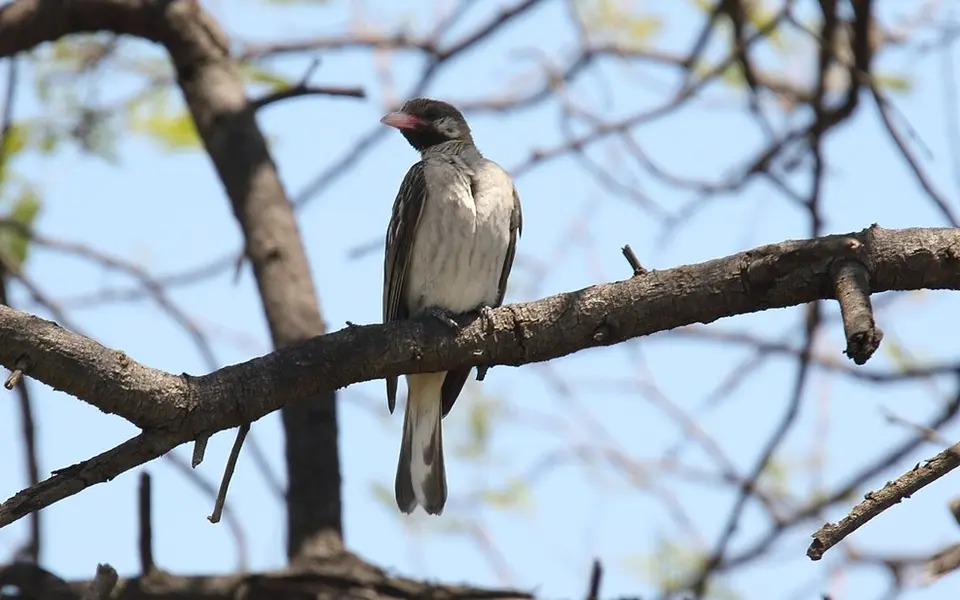
The greater honeyguide knows where the bees' nests are, but bees can easily kill a bird that breaks in. People with smoke and axes can open a nest, once they find it.
The greater honeyguide is a gray-brown bird about eight inches long that lives across Africa south of the Sahara. It gets a person's attention with a wavering, chattering call. When the person follows, it flies ahead toward a bees' nest and stops close by. It knows where many of the nests in its territory are.
What the bird wants is inside: the wax, the eggs and the larvae. Honeyguides are among the few birds that feed regularly on beeswax. Breaking in is the hard part. Their thick skin gives them only limited protection from stings, and bees can easily kill them. On its own, a greater honeyguide goes into nests early in the morning, while the bees are cold and sluggish, or feeds at hives that are abandoned or have already been robbed.
People can do the breaking in. The hunters calm the bees with fire and smoke and cut the nest open with axes and machetes. They take the honey, and the bird eats the wax that is left.
The hunters get a lot out of it. In northern Tanzania, honeyguides raised the rate at which Hadza hunters found bee nests by 560 percent, and led them to nests that held more honey. A study of the Boran people of East Africa found that following a honeyguide cut their search time by about two-thirds.
What is a tomato, botanically speaking?
WhyIn 1893 the US Supreme Court ruled that the tomato is a vegetable. A tariff taxed vegetables but not fruit, and the court went by how people eat it: with dinner, not as dessert. Botanically it is still a berry.
The people call the birds as well. The Boran use a loud whistle called the fuulido, which doubles how often they meet a honeyguide. Yao honey-hunters in northern Mozambique use a traditional call, "brrrr-hmm," and a study there found that the birds responded to it and that using it greatly raised the chances of finding a hive. Yao hunters say only adult honeyguides answer the call, not young ones.
In African folklore, the honeyguide has to be thanked with a gift of honey. If it is not, it may lead its follower to a lion, a bull elephant or a venomous snake. Not everyone pays. The Hadza often burn, bury or hide the leftover wax, to keep the bird hungry and more likely to guide them again.
A study published in 2025 found that honeyguides do sometimes lead people to animals that are not bees, snakes among them. The researchers think the birds are probably making mistakes rather than handing out punishment.
Where people stop following, the guiding stops too. Near cities, where people buy sugar instead of hunting for wild honey, the habit is disappearing. In parts of Kenya some honeyguides no longer guide at all, which is thought to be because people there stopped responding.