 TouchéGet the app
A newspaper notice led to the monarchs' winter hideout
In 1937 a Toronto zoologist began tracking monarch butterflies on their way south each fall, but the trail kept vanishing in Texas.
Every fall, monarch butterflies leave southern Canada and the northern United States and fly south. Until 1975, scientists did not know where the ones from the east spent the winter.
In 1937 Fred Urquhart, a graduate student in entomology at the University of Toronto, began plotting their route. He was the first to record that the butterflies head south to southwest. After he married Norah Patterson in 1945, she became his full partner in the work. The Urquharts tagged the wings of thousands of monarchs, raised thousands more at their home, and recruited hundreds of volunteers to tag butterflies and report where tagged ones turned up.
The tags mapped several routes south. Then, in Texas in late fall, the trail disappeared, and in spring it reappeared.
The Urquharts asked for help in the Mexican press. In 1972 Kenneth Brugger, a textile engineer and amateur naturalist, showed a notice of theirs in a local newspaper to Catalina Aguado, who had grown up on a ranch in the mountains of Michoacán. Brugger searched for several years, first as a volunteer and then as the Urquharts' paid assistant. Aguado joined him, and they married in 1974. On weekends they drove around Mexico in his Winnebago.
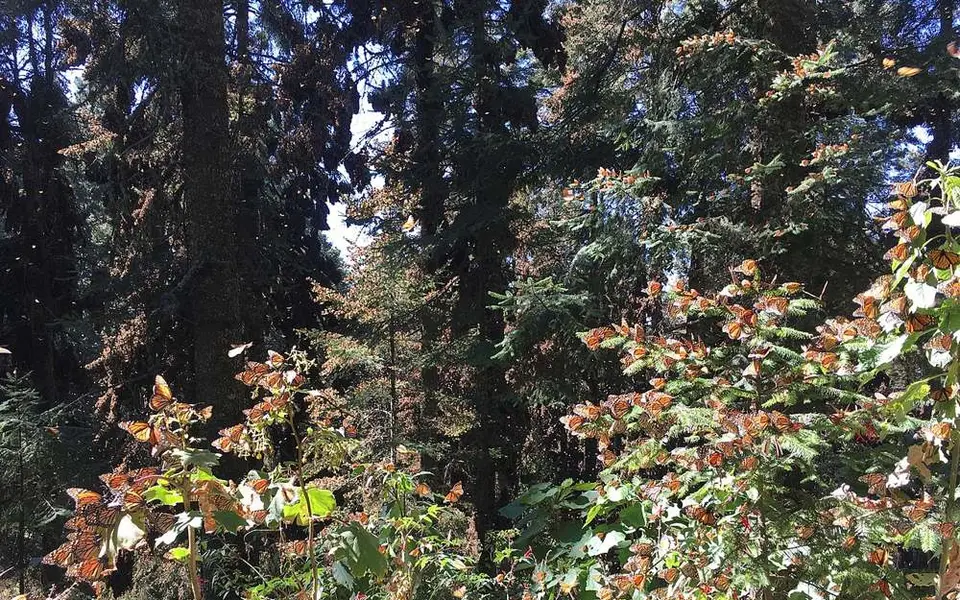
The clues pointed to Michoacán. They hiked the mountains by day and slept in the camper at night. In January 1975, on a mountaintop there, they found the trees, and even the ground, covered with millions of resting butterflies. It was about 2,500 miles from where the migration starts.
Which of these is an ape?
WhyApes do not have tails, and monkeys mostly do. The orangutan is a great ape, like gorillas and chimpanzees. Its name comes from Malay words meaning person of the forest.
In early 1976 the Urquharts went to see the site they had spent decades looking for. That August, National Geographic ran Urquhart's article "Discovered: The Monarch's Mexican Haven." The cover photo showed Aguado covered in butterflies.
The people who lived there had known all along. The Mazahua have lived near the sites for centuries, and residents easily remember seeing the butterflies before 1975. Their arrival is tied to the Day of the Dead in early November. The Mazahua believe the souls of the dead return as monarch butterflies to enjoy the fruit and bread left for them on altars.
A dozen such sites have since been found in the mountains west of Mexico City. They are now protected as the Monarch Butterfly Biosphere Reserve, a World Heritage Site.
Catalina Aguado, now Catalina Trail, later earned a degree in social work in Austin, Texas. "I'm not a scientist," she says. "I'm a gardener that likes insects."