 TouchéGet the app
The modern strawberry began with a French spy's five plants
In 1712 France sent an army engineer, Amédée-François Frézier, to Chile to sketch the Spanish forts while posing as a merchant.
In January 1712 a French army engineer named Amédée-François Frézier sailed for South America. His orders were to study the fortifications of Chile and Peru, which belonged to Spain. After about five months at sea on an armed merchant ship, he rounded Cape Horn and landed at Concepción, Chile, in June.
He passed himself off as a trader, which let him tour the forts like a visitor. He made friends with the Spanish governors and sketched maps of the ports. They showed the best approaches for an attack and where the ammunition was kept. He also wrote about the mines, the church, the wildlife and the crops.
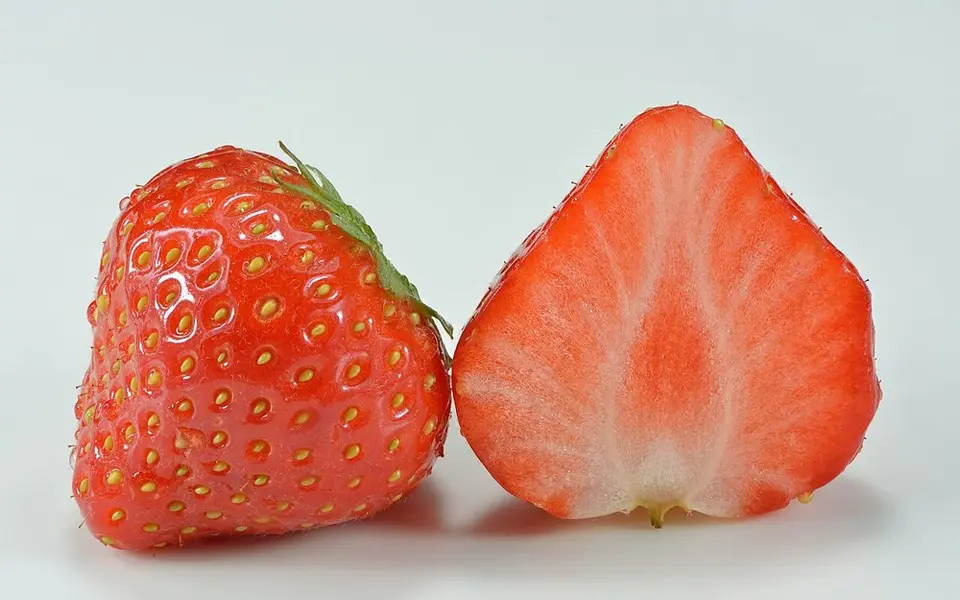
One of the crops was a strawberry. The Chileans grew whole fields of it, he wrote, and its fruit was "usually as large as a whole walnut, and sometimes as a small egg." It was whitish red, and a little less delicate in taste than the woodland strawberries of France.
Frézier sailed home in 1714 with five of the plants. He presented his maps to Louis XIV, who paid him 1,000 écus from the royal treasury. According to the strawberry historian G. M. Darrow, Frézier's family name came from fraise, the French word for strawberry.
Which cheese melts on a classic pizza?
WhyIts name means "cut off," from the Italian verb mozzare, for the way portions are separated from the stretched curd. Fresh mozzarella squeaks when you chew it.
In France the plants grew vigorously and produced no fruit. They had only female flowers, so they needed pollen from another strawberry. Attempts to grow them in Anjou, Touraine and along the lower Loire failed.
They did better in Brittany. At Plougastel the Chilean strawberry flourished in the marine climate, and gardeners found that it bore heavily when they planted other strawberries in alternating rows with it. One of those neighbors was the Virginia strawberry, which had also been brought over from North America. In the 1750s the two crossed, and Breton gardens had a new strawberry. Frézier himself was director of fortifications for the whole of Brittany, a post he had held since 1739.
In 1759 Philip Miller recorded a "pine strawberry" growing in Chelsea, in England, named for a flavor that reminded people of pineapple. Its scientific name, Fragaria × ananassa, means the same thing. In 1766 Antoine Nicolas Duchesne, who worked in the gardens of Versailles, showed that it was a hybrid of the Chilean strawberry and the Virginia strawberry.
That hybrid is the garden strawberry, the one grown commercially today. One of its parents came from Chile, and the other from eastern North America.