 TouchéGet the app
The Academy gave him an Oscar in case he lost, then he won
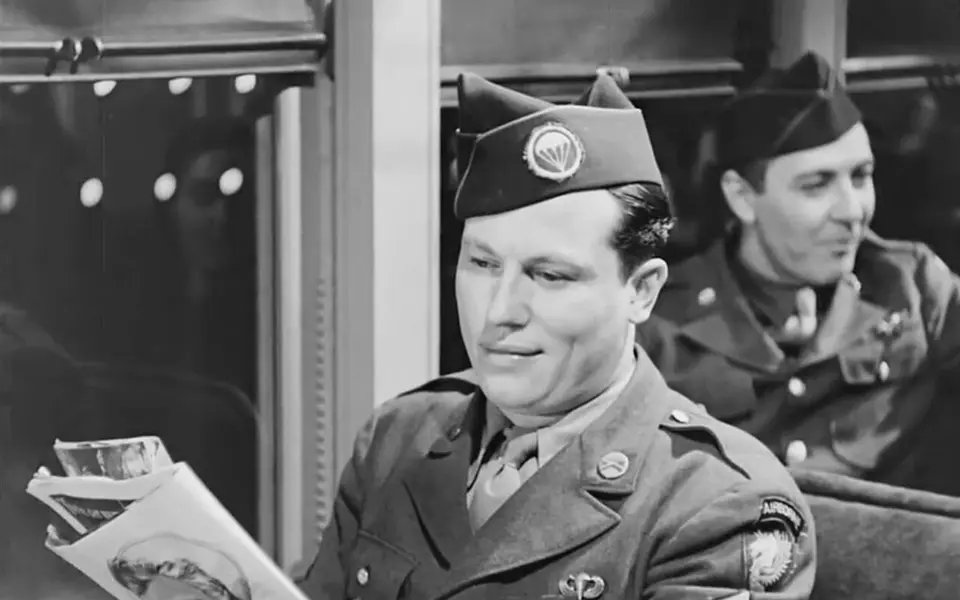
Harold Russell lost both hands in an Army training accident during World War II, and he was not an actor.
On June 6, 1944, Harold Russell was teaching demolition to soldiers of the 13th Airborne Division at Camp Mackall, North Carolina. A defective fuse set off the TNT he was handling. He lost both hands, and he was given two hooks in their place.
After he recovered, he appeared in a short Army film, Diary of a Sergeant, about his own rehabilitation at Walter Reed Army Medical Center. The director William Wyler saw it. Wyler was preparing The Best Years of Our Lives, about three servicemen coming home from World War II. He changed his casting plans and gave Russell the part of Homer Parrish, a Navy sailor who has lost both hands.
The film came out in 1946, and Russell was nominated for Best Supporting Actor. The Academy's Board of Governors wanted to honor him. They also assumed that a man who was not a professional actor had little chance of winning. So they created a special award for him, "for bringing hope and courage to his fellow veterans" through his appearance in the film.
Which demigod joins Moana on her ocean voyage?
WhyMaui is a shape-shifting demigod known for pulling islands up from the sea floor with a magic fishhook. Moana needs his help to return a stolen heart to the goddess Te Fiti. He is voiced by Dwayne Johnson.
At the ceremony on March 13, 1947, Shirley Temple handed him the special award. Later that night he won Best Supporting Actor as well. It is the only time the Academy has given two Oscars for the same performance. The film also won Best Picture.
Russell had been paid less than $10,000 for the part, with no share of the profits. Wyler told him to go back to college, because "there wasn't much call for a guy with no hands in the motion picture industry." Russell earned a business degree at Boston University. He served three terms as national commander of the veterans' group AMVETS, and for more than two decades he was the unpaid chairman of the President's Commission on Employment of the Handicapped. He acted only a few more times.
In 1992 Russell put his Best Supporting Actor statuette up for auction, and a private collector bought it for $60,500. Russell said he needed the money for his wife's medical bills. He kept the special award. He was the first Oscar winner to sell his award. After Russell died in 2002, the buyer turned out to be Lew Wasserman, a studio executive and talent agent, who gave the statuette back to the Academy.