 TouchéGet the app
Scrolls burned by Vesuvius are being read without unrolling
From 1752 workmen digging under Herculaneum found more than 1,800 papyrus scrolls, carbonized by the eruption of AD 79.
In 1752 workmen digging tunnels under Herculaneum began finding papyrus scrolls in a villa that the eruption of Vesuvius had buried in AD 79. In all they brought out more than 1,800 scrolls, whole and in pieces. It is the only library from the ancient world that has survived whole.
The heat of the eruption had turned the scrolls into compact, fragile blocks of carbon, sealed in rock. They looked like lumps of charcoal, and at first some were thrown away, or possibly burned for heat. Then someone saw faint letters on one of the blackened lumps.
Nobody knew how to open them. The artist in charge of the finds, Camillo Paderni, sliced scrolls in half and copied whatever writing he could see as he peeled off the layers. He did this to hundreds of scrolls and destroyed them.
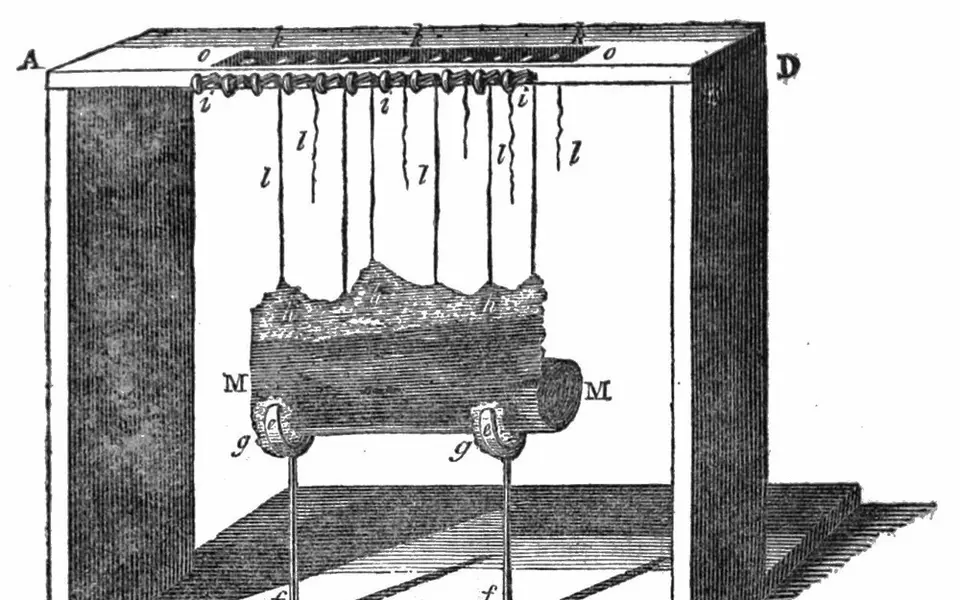
In 1756 Antonio Piaggio, who looked after manuscripts at the Vatican Library, built a machine that lifted a scroll open a fraction at a time with silk threads attached to its edge. The first scroll took four years. The method destroyed the beginning of every scroll, and the ink faded once it met the air, so each new strip had to be copied as soon as it was opened.
Others tried rose water, mercury and chlorine. In 1816 a team using a copy of Piaggio's machine destroyed an entire scroll without getting any text from it. A later peeling method made one scroll burst into 300 pieces. By the middle of the 20th century, 585 scrolls or pieces had been fully unrolled.
Which emperor beat Italy at the Battle of Adwa in 1896?
WhyMenelik II's forces routed an invading Italian army, forcing Italy to recognize Ethiopian independence. It was one of the few African victories over a European colonial power during the entire colonial era.
The rest stayed rolled up, and X-rays could not see inside them. The ink was made from carbon, almost the same stuff as the burned papyrus, so ordinary scans could not tell the two apart. Where there is ink, though, the surface is very slightly thicker. A technique called phase-contrast CT can pick up that difference.
The scan gives a 3D model of the roll, and software then has to trace each crushed layer through it and flatten it out. In 2016 Brent Seales, a computer scientist at the University of Kentucky, used this virtual unrolling to read a burned scroll from Israel, the En-Gedi Scroll.
In 2023 Seales, Nat Friedman and Daniel Gross launched the Vesuvius Challenge, a contest with a $700,000 grand prize for reading passages from two unopened Herculaneum scrolls. That October a 21-year-old computer science student at the University of Nebraska won $40,000 for finding the first word inside an unopened scroll: porphyras, Greek for "purple."
In February 2024 the grand prize went to a team that had recovered about 5 percent of one scroll, 15 columns of text and more than 2,000 letters. It is believed to be a lost work by the philosopher Philodemus, about the pleasures of music and food.
Most of the villa is still underground, and more scrolls may be buried in it.