 TouchéGet the app
Oxford's mayors paid for a 1355 tavern brawl until 1825
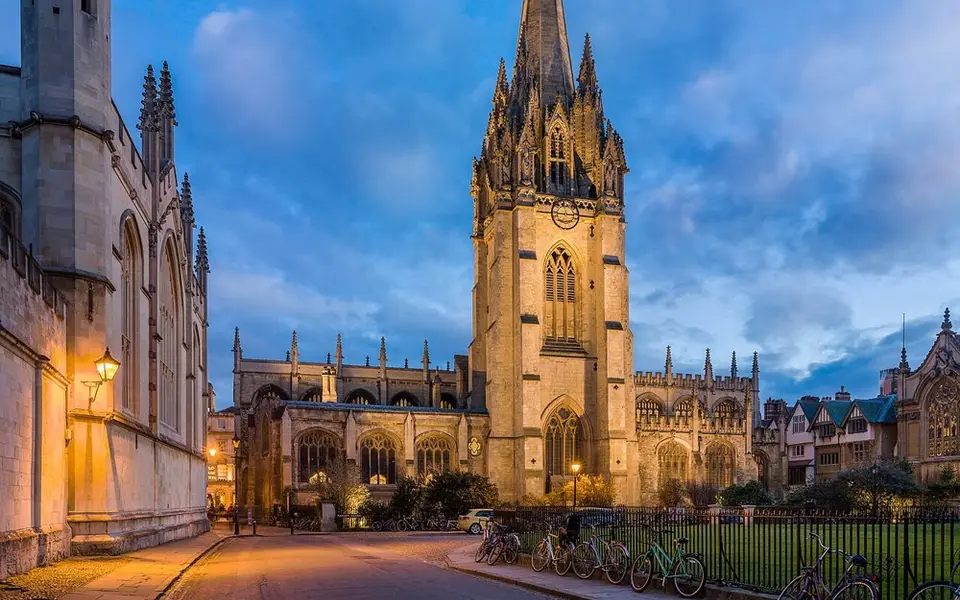
On February 10, 1355, two students at an Oxford tavern complained about the wine.
On February 10, 1355, two students went for a drink at the Swindlestock Tavern, at the crossroads in the middle of Oxford. Nearly all of Oxford's students were clergy of some kind, and these two were rectors of country parishes in the southwest of England. They told the man serving them that the wine was bad and asked for something better. He refused. One of the students threw his wine in the man's face. Accounts sympathetic to the university say he then threw his drinking pot at his head; the town's version says he beat him with it.
Other drinkers joined in, and the fight spilled out into the crossroads. Within half an hour it was a riot. The townspeople rang the bell of St Martin's, the town church, to call for help. The students rang the bells of St Mary's, the university church. The university's chancellor came out to calm both sides. Someone shot arrows at him, and he retreated.
The next morning the chancellor proclaimed that nobody was to carry weapons. At the same time, the town's bailiffs were urging townspeople to arm themselves and paying men from the countryside to come in. About 80 townsmen with bows chased a group of scholars from St Giles' Church and killed at least one. Late that day up to 2,000 people from the countryside came through the west gate, waving a black banner. The students barricaded themselves in their halls. The crowd broke into inns and lodgings, and any student they found was killed or maimed.
On the third morning the chancellor went to the nearby village of Woodstock, where King Edward III was staying. The fighting started again anyway. By the time it died down that evening, many scholars had fled and much of the town had burned. The number of students killed is usually given as 63. Townspeople were killed too.
The king sent judges to find out what had happened, and he came down on the university's side. He pardoned the scholars, fined the town 500 marks, and sent the mayor and the bailiffs to prison in London. The Bishop of Lincoln put the town under an interdict. For about a year Oxford had no weddings, no burials and no church services except on the great feast days. Only young children could be baptized.
Which inventor is best known for creating dynamite?
WhyNobel found a way to make the unstable explosive nitroglycerin safe to handle. He patented dynamite in 1867, and it transformed mining and construction. The fortune it earned him funded the Nobel Prizes.
In June the king gave the university a charter that put it above the town. Its chancellor got the right to tax the bread and drink sold in Oxford and to check the weights and measures its traders used. The town lost the power to act in any legal case that involved a student.
When the bishop lifted the interdict, he set a penance that came around every year. On St Scholastica's Day the mayor, the bailiffs and 60 townspeople were to attend a Mass at St Mary's for the dead. The town was to pay the university a penny for every scholar killed. Each new mayor had to swear to uphold the university's rights.
Several mayors refused to attend over the centuries, and they were fined heavily. In 1825 the mayor refused, and this time the custom was allowed to lapse.
On February 10, 1955, the 600th anniversary of the riot, the university gave the mayor of Oxford an honorary degree. The city made the university's vice-chancellor an honorary freeman.