 TouchéGet the app
Cleopatra's Needle is some 1,400 years older than Cleopatra
London's Cleopatra's Needle was set up for the pharaoh Thutmose III around 1450 BC, and it reached Alexandria after Cleopatra was dead. Egypt gave it to Britain in 1819.
The obelisk on the Thames Embankment in London was cut from red granite at Aswan and set up at Heliopolis on the orders of the pharaoh Thutmose III, around 1450 BC. About 200 years later Ramesses II had his own inscriptions carved down its sides.
It reached Alexandria about 18 years after Cleopatra died. In 13 or 12 BC the Romans moved it and a twin there and set them up at the Caesareum. Cleopatra had planned that temple in honor of Julius Caesar or Mark Antony, and the emperor Augustus finished it after he defeated her.
The name was in use by around 1200, when the traveler Abd al-Latif al-Baghdadi called the pair "Cleopatra's big needles." In 1735 a former French consul in Egypt wrote that they were attributed to Cleopatra "without anyone knowing too well on what basis."
At some point one of the two fell over, probably in an earthquake in 1303. Sand covered it, and that kept most of its hieroglyphs from wearing away. The fallen one is the one now in London.
In 1819 Muhammad Ali, the ruler of Egypt, gave it to Britain to mark British victories over the French in Egypt. The British government welcomed the gift and declined to pay to move it. Plans to bring it over came to nothing in 1832 and again in the 1850s. In 1867 James Edward Alexander began campaigning for it, after hearing that the owner of the land where it lay meant to break it up for building material.
Who patented the telephone in 1876?
WhyBell's mother and his wife were both deaf, and his work on speech and hearing is what led him to the telephone. He patented it in 1876. Edison, Tesla and Marconi are each linked to other inventions.
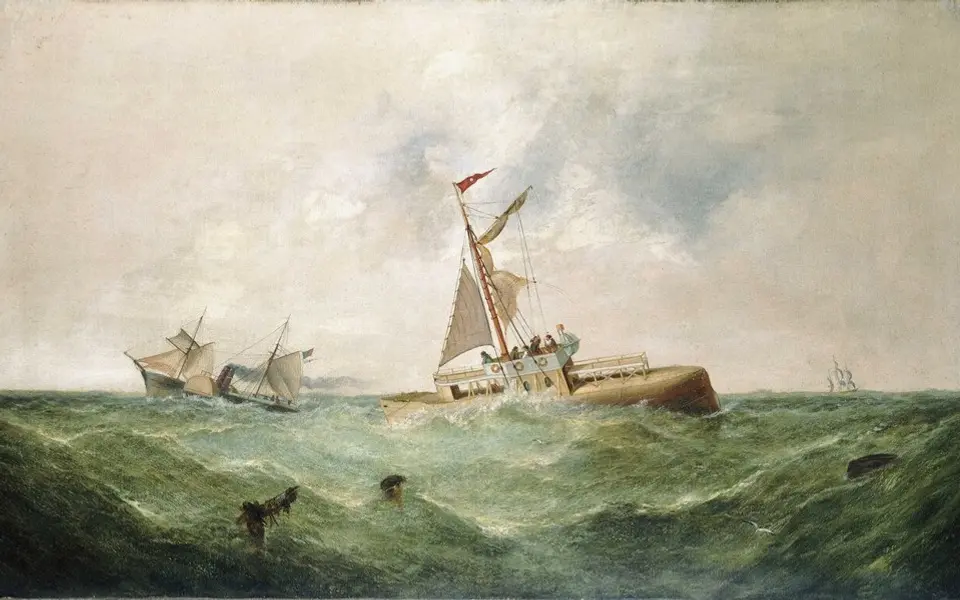
The money came from Erasmus Wilson, a skin doctor, who paid about £10,000 in 1877. The obelisk was dug out of the sand and sealed inside an iron cylinder 92 feet long and 16 feet across. The cylinder had a rudder, a mast, a small deck house, a crew and a name: Cleopatra. On September 21, 1877, the steamship Olga left Alexandria towing it.
On October 14 a storm in the Bay of Biscay set the Cleopatra rolling so violently that it could not be controlled, and the tow ropes had to be cut. The Olga sent out a boat with six volunteers. The boat capsized, and all six men died. The Olga then managed to come alongside and took off the Cleopatra's captain and his five crew. The Olga's captain reported the Cleopatra "abandoned and sinking."
It stayed afloat. Four days later Spanish fishing boats found it drifting, and a steamer from Glasgow towed it into the Spanish port of Ferrol. The steamer's captain claimed £5,000 for the salvage, and the claim was settled for £2,000 before the obelisk could leave. A tug towed it the rest of the way, and on January 21, 1878, it arrived in the Thames estuary. The schoolchildren of Gravesend were given the day off.
A wooden model of the obelisk had been put up outside the Houses of Parliament, and that site was turned down. The obelisk went up on the Victoria Embankment on September 12, 1878. Sealed into its pedestal were a set of British coins, a railway timetable, a baby's bottle, a box of hairpins and photographs of 12 of the best-looking English women of the day.
The plaque on the side of the pedestal that faces the river lists the six men who died in the Bay of Biscay.