 TouchéGet the app
Hans the horse did sums only when the asker knew the answer
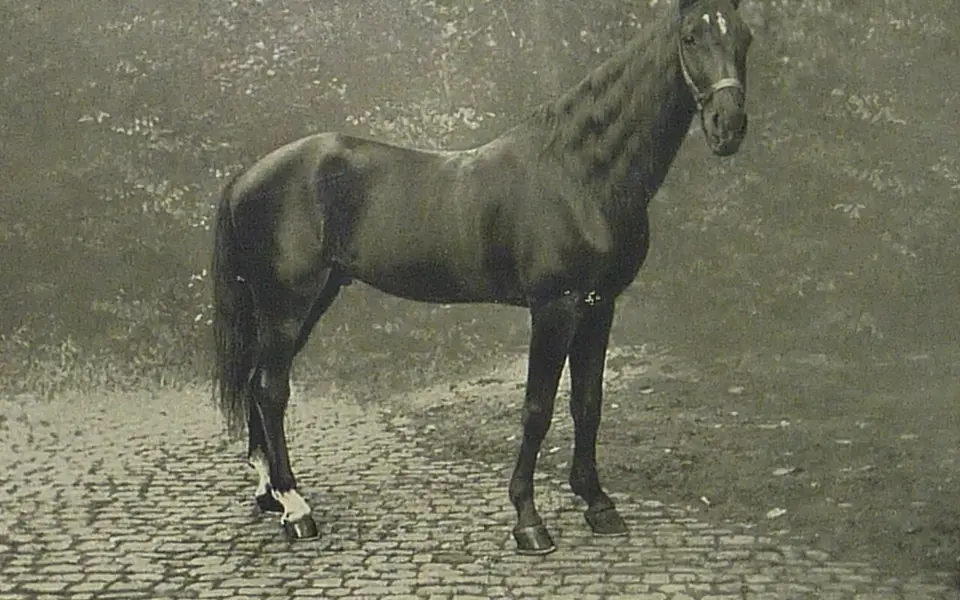
Clever Hans tapped out answers with a hoof, and in 1904 a commission of 13, including a circus manager and a zoo director, found no trick.
Ask the horse a question and he would tap out the answer with a hoof. Asked for the date of the Friday after a Tuesday the eighth, Hans tapped eleven times.
His owner, Wilhelm von Osten, taught mathematics at a German secondary school and trained horses as a hobby. Hans was said to add, subtract, multiply and divide, work with fractions, tell the time and read German. Questions could be spoken or written down. Von Osten showed him around Germany and never charged admission, and in 1904 The New York Times reported on him.
The interest ran high enough that Germany's board of education set up a commission. The psychologist Carl Stumpf gathered a panel of 13, among them a veterinarian, a circus manager, a cavalry officer, several schoolteachers and the director of the Berlin zoo. In September 1904 the panel reported that no tricks were involved.
Stumpf passed the case to his assistant, Oskar Pfungst. Pfungst moved the tests away from spectators and brought in questioners other than von Osten. He fitted Hans with blinders, so that sometimes the horse could see the questioner and sometimes not. He also varied whether the questioner knew the answer.
Hans did well with strangers asking, so von Osten was not cheating. But the horse got the answer right only when two things were true at once: he could see the person asking, and that person knew the answer.
How many arms does an octopus have?
WhyTwo-thirds of an octopus's neurons are in its eight arms, not its brain. Each arm can make some decisions on its own, and a severed arm can still move and react.
Pfungst started watching the questioners. As the taps got close to the right number, the person asking grew tense, and it showed in posture and face. At the right tap the tension went out of them, and that was when Hans stopped. Von Osten had no idea he was doing it.
Pfungst tried it on people next, playing the horse himself. He asked volunteers to stand on his right and concentrate on a number while he tapped with his right hand. When he reached the number, he often saw "a sudden slight upward jerk of the head."
He could not switch it off in himself either. Once he had learned to run Hans's performances, he found that he gave the cues whether he meant to or not.
Pfungst published his findings in 1907. Psychologists now call the problem the Clever Hans effect. It is one reason experiments are run double-blind, so that the person running the test does not know which answer is expected.
Von Osten was never persuaded. He went on showing Hans around Germany, and large, enthusiastic crowds kept coming.