 TouchéGet the app
Crocodile tears were put to the test in 2006, on caimans
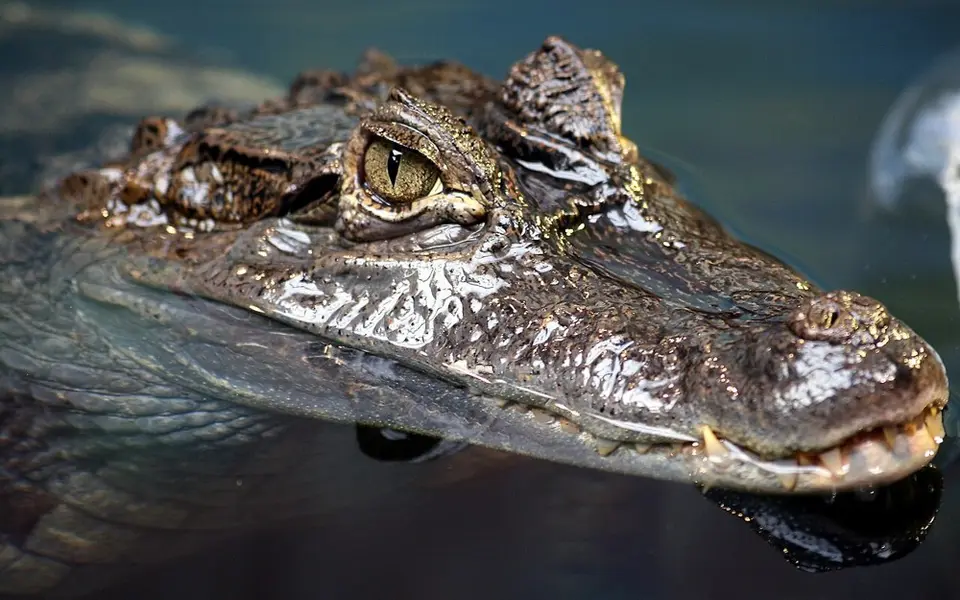
An old story said crocodiles weep while they eat their victims, and "crocodile tears" came to mean fake grief. Crocodiles do make tears, to keep their eyes wet.
The story is ancient. A collection of proverbs credited to Plutarch compares the crocodile to people who want someone dead, or cause the death, and then mourn in public. The early medieval scholar Photios retold it with a Christian lesson about repentance, and medieval bestiaries repeated it.
It reached a wide English audience in the 1300s through the Travels of Sir John Mandeville, a book of travelers' tales. Its "cockodrills" live in "Inde," eat no meat all winter, and "slay men, and they eat them weeping."
Later writers disagreed about why the crocodile cried. Edward Topsell said it sobbed and sighed as if in distress to lure a man close, and then destroyed him. He also repeated the older version, in which the tears after a meal were a false repentance, like Judas weeping after he betrayed Jesus.
Shakespeare used both. In Henry VI, Part 2, a character describes the Duke of Gloucester's faked grief: "Gloucester's show / Beguiles him, as the mournful crocodile / With sorrow, snares relenting passengers." In Antony and Cleopatra, Antony answers a question about what crocodiles are like with a description that says nothing, ending "And the tears of it are wet."
"Malaria" comes from Italian words meaning what?
WhyMalaria is Italian for bad air, since people once blamed the fever on foul air near swamps. English speakers used to call it ague or marsh fever. Mosquitoes were shown to spread it much later.
Crocodiles do produce tears, though not from emotion. The fluid cleans and wets the eye, and it shows most when the animal has been out of the water for a while. In American and saltwater crocodiles, it also helps get rid of salt they take in with their food.
In 2006 the neurologist Malcolm Shaner and Kent Vliet, a researcher at the University of Florida, set out to test the story itself. At the St. Augustine Alligator Farm, Vliet recorded seven caimans feeding. He chose caimans because there they could be watched eating on dry land. Five of the seven were seen weeping. The researchers suggested that warm air, hissed out through the sinuses as the animals fed, set off the tear glands.
The phrase has also named a human condition. Some people who recover from Bell's palsy shed tears when they eat, because the regrown facial nerve is wired to the wrong gland. The Russian neuropathologist F. A. Bogorad described it in 1926, in an article titled "syndrome of the crocodile tears."