 TouchéGet the app
Bluetooth was only a code name, taken from a Viking king
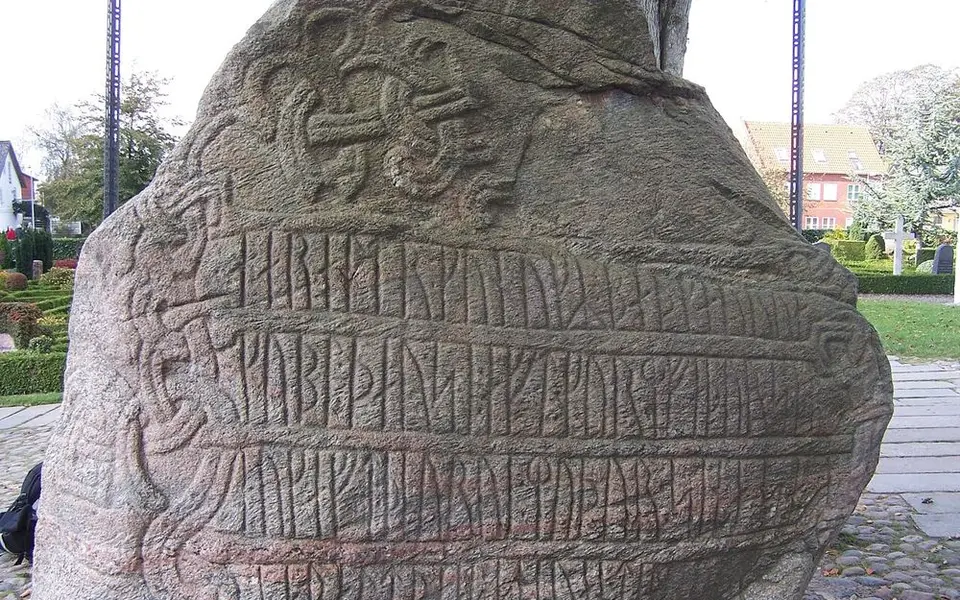
In 1997 an Intel engineer suggested naming a new wireless link after Harald Bluetooth, a 10th-century king who united Denmark.
In 1997 a group of companies was working on a short-range radio link that would let phones, laptops and headsets connect without cables. It needed a name, at least for the time being. Jim Kardach, an engineer at Intel, suggested Bluetooth.
The technology had started at Ericsson in Lund, Sweden, in 1989, as a way to make wireless headsets. By 1997 the Ericsson team had a working design. IBM wanted it for its ThinkPad laptops, and the two companies agreed to make it an open industry standard. Intel, Nokia and Toshiba joined, and in May 1998 the five companies launched the Bluetooth Special Interest Group, which still manages the standard.
Kardach got the idea from Sven Mattisson, one of the Ericsson engineers. In a conversation, Mattisson told him about Scandinavian history through stories from The Long Ships, a novel about Vikings and the Danish king Harald Bluetooth. Later Kardach came across a picture of Harald's runestone in a book by Gwyn Jones, A History of the Vikings.
Harald ruled Denmark from about 958 to about 986, and he brought its scattered tribes together into one kingdom. The new radio was supposed to unite devices the same way.
Nobody meant the name to last. According to the official Bluetooth website, it "was only intended as a placeholder until marketing could come up with something really cool." When the time came, the choice was between RadioWire and PAN, short for Personal Area Networking. PAN was the favorite, until a search found tens of thousands of uses of it on the internet. A full trademark search on RadioWire could not be finished before the launch. That left Bluetooth, and by then the name had spread through the industry.
Which US president completed the Louisiana Purchase in 1803?
WhyJefferson doubled the size of the United States for about three cents an acre, buying land from a cash-strapped Napoleon. He then sent Lewis and Clark to explore the new territory.
The logo is two runes merged into one symbol: the letters for H and B in the runic alphabet of Harald's time.
Where Harald's own nickname came from is uncertain. It first appears in writing around 1140, and a chronicle from later in the same century explains it as "bluish or black tooth." The traditional explanation is that he had a bad tooth that looked dark. Another reads it as "dark thane."
The stone in Kardach's book stands at Jelling, in Denmark. Harald raised it around 965 in memory of his parents. Its runes describe him as "the Harald who won the whole of Denmark and Norway and turned the Danes to Christianity," and it is popularly known as Denmark's baptismal certificate.
One side of the stone is carved with a figure of Christ. A copy of that carving is printed inside the front cover of Danish passports.