 TouchéGet the app
Tin cans were patented 45 years before the can opener
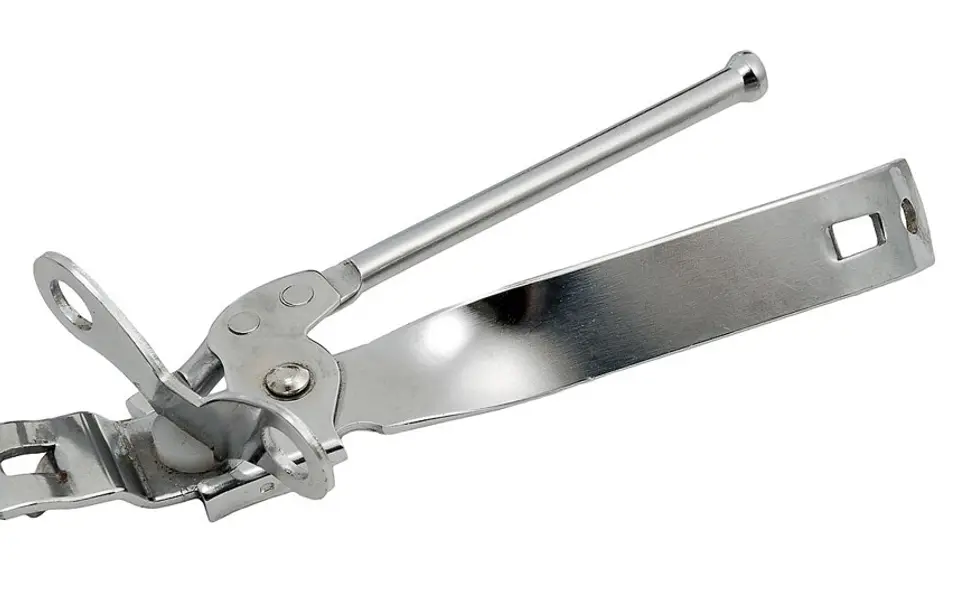
In 1810 a patent was granted in Britain for preserving food in tin cans.
The first cans of food carried their own instructions: "Cut round the top near the outer edge with a chisel and hammer." They were sturdy containers of tinned iron, and the can weighed more than the food inside it. During the War of 1812, British soldiers opened theirs with bayonets and knives.
The idea of sealing food and then heating it came from France. The French army had offered a prize of 12,000 francs for a new way to preserve food. Nicolas Appert, a confectioner and brewer, sealed food in glass bottles and boiled them, and in 1810 the government paid him 12,000 francs on condition that he publish his method. He never understood why it worked. It would be about 50 years before Louis Pasteur showed that microbes make food spoil.
The same year, Peter Durand took out a British patent for doing the same thing in tin cans. Bryan Donkin and John Hall bought it, and by 1813 their factory in London was producing canned food for the Royal Navy. Each can was made by hand, and cooking one could take up to six hours, so canned food was too expensive for ordinary people. The army, the navy and explorers bought it. In 1824 William Parry took canned beef and pea soup to the Arctic.
For decades there was no special tool to open a can. One explanation is that the tools people already had did the job well enough to make a new one not worth the cost. Another is the metal. Only after thinner cans came in, in the 1850s, did a dedicated opener become practical.
Mayonnaise is an example of which kind of mixture?
WhyThe egg yolk does the holding. Its lecithin is an emulsifier that lets oil and lemon juice or vinegar stay mixed, and in egg sauces like mayonnaise the egg does not set the way it does in a custard.
The first, in 1855, came from Robert Yeates, a maker of cutlery and surgical instruments in Middlesex, England. It was a lever with a claw at the end, worked by hand around the top of the can. In 1858 Ezra Warner of Waterbury, Connecticut, patented an opener with a sharp sickle that was pushed into the can and sawed around the edge. Soldiers used it in the American Civil War. It was too dangerous for home kitchens.
In 1870 William Lyman of Meriden, Connecticut, patented the first opener with a cutting wheel that rolled around the rim. It was hard to use. The user had to pierce the center of the lid with a metal rod, adjust a lever to the size of the can, fix it with a wing nut, and then run the wheel around the edge.
The easy version came in 1925, when the Star Can Opener Company added a second wheel. It had a serrated edge that gripped the rim and kept the lid pressed against the cutting wheel. Electric can openers followed in the late 1950s.