 TouchéGet the app
Mrs Beeton began her cookbook at 21 and copied most recipes
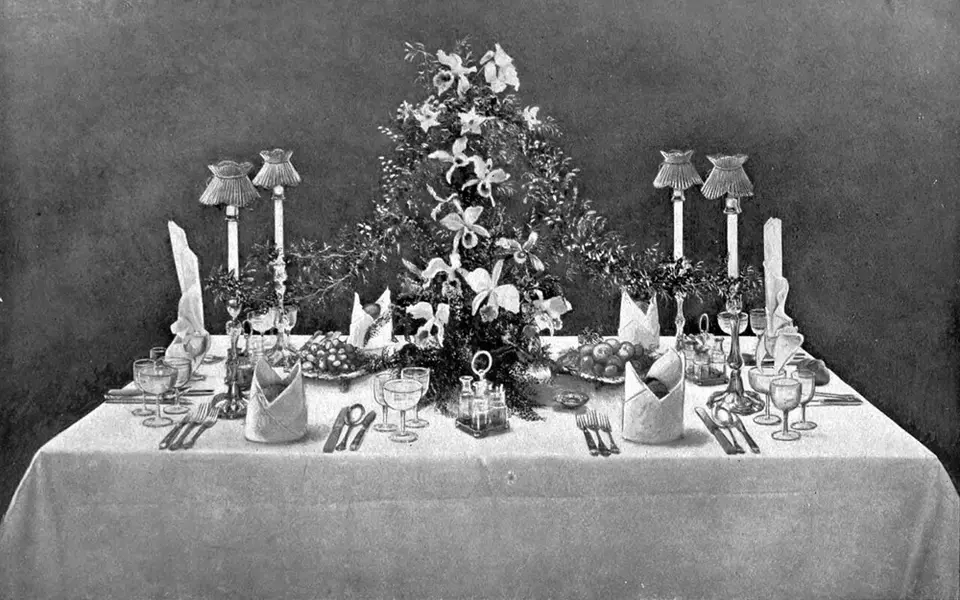
Mrs Beeton's Book of Household Management came out in 1861 and sold 60,000 copies in its first year.
In 1857 Isabella Beeton, then 21, started writing the cookery column of The Englishwoman's Domestic Magazine, which her husband Samuel published. She was not a regular cook. When the magazine asked readers to send in their own recipes, more than 2,000 arrived, and the Beetons chose and edited them. Others they copied from published cookbooks, mostly without saying where they came from.
A family friend, Henrietta English, had suggested it. Cookery, she wrote to Isabella, was a science "only learnt by Long Experience and years of study which of course you have not had." Her advice was to compile a book from the best cookbooks already in print. The Beetons drew on Eliza Acton, Hannah Glasse, Alexis Soyer, the French pastry chef Marie-Antoine Carême and others.
In November 1859 the material began to appear in 48-page monthly supplements to the magazine. The type was set in fixed blocks of 48 pages, so in several issues a sentence or a recipe breaks off at the end of one instalment and picks up in the next. On October 1, 1861, the 24 instalments came out as one book of 1,112 pages, more than 900 of them recipes. It sold 60,000 copies in its first year and nearly two million by 1868.
What the book added was order. Acton, whose recipes it borrowed, had described how to cook a dish and then listed the ingredients. Beeton's recipes put the ingredients first, with quantities, then the method, then the time, the cost, how many people the dish would feed and when it was in season. That fixed structure was the book's main innovation.
Which herb is the main ingredient of tabbouleh?
WhyTraditional Levantine tabbouleh has more herbs, mainly parsley, than bulgur, while Western versions tend to flip that ratio. Lebanon has a National Tabbouleh Day, held on the first Saturday of July since 2001.
The only recipe in the book that was her own was a soup she made for the poor of Pinner, where the Beetons lived, during the hard winter of 1858 to 1859. Her biographer Kathryn Hughes found that her first recipe for Victoria sponge left out the eggs.
Isabella Beeton died on February 6, 1865, at 28, of a fever that followed childbirth. She had been correcting the proofs of a shorter version of the book. In 1866 Samuel, in debt, sold the rights to the publishers Ward, Lock and Tyler for £3,250. The early editions had carried a notice of her death. The new publishers had it removed, letting readers imagine "some mob-capped matriarch" still keeping an eye on them.
The book kept growing under other editors. By 1906 it ran to 2,056 pages and 3,931 recipes. The Oxford English Dictionary records that by 1891, "Mrs Beeton" was already being used to mean any authority on cooking and running a home.
Acton's own book was eclipsed by Beeton's and was not reprinted in full until 1994. The Dictionary of National Biography gave Acton an entry in its first volume, in 1885. Beeton did not get one until 1993.