 TouchéGet the app
In 1943 the US banned sliced bread for seven weeks
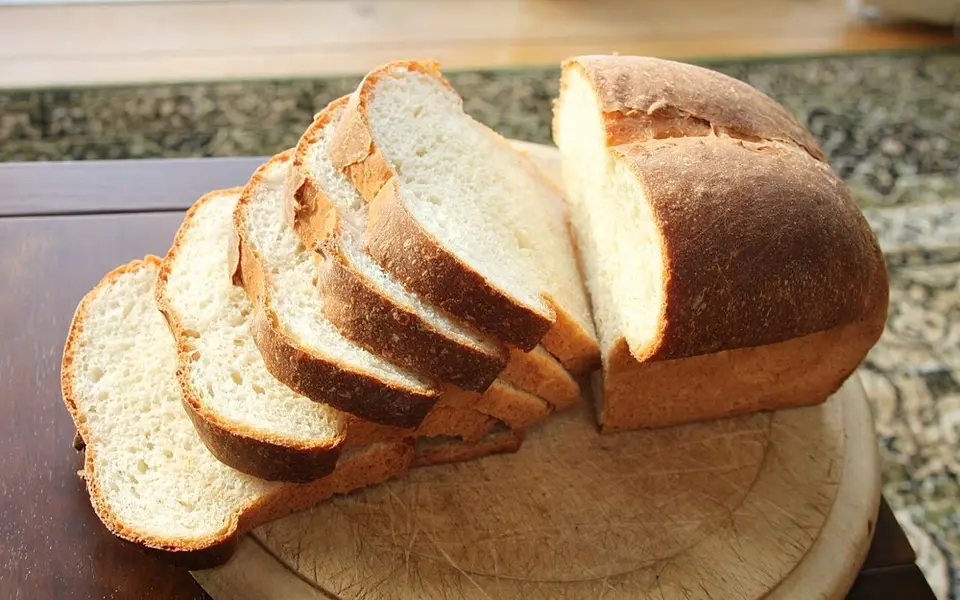
On January 18, 1943, America's wartime food administrator banned the sale of sliced bread, partly to save on wrapping.
Otto Rohwedder owned three jewelry stores in St. Joseph, Missouri, and was convinced he could build a machine to slice bread. He sold the stores to pay for it. Then a fire at the factory where he was building it destroyed his prototype and his blueprints, and it took him years to raise the money again.
By 1928 he finally had a working machine. He sold the first one to a baker friend, Frank Bench, at the Chillicothe Baking Company in Missouri. The first sliced bread went on sale there on July 7, 1928, Rohwedder's 48th birthday. It was advertised as "the greatest forward step in the baking industry since bread was wrapped."
A St. Louis baker, Gustav Papendick, bought the second machine and worked on keeping the slices together long enough to wrap them. Rubber bands and metal pins failed. A cardboard tray worked. By 1933 American bakeries were turning out more sliced loaves than unsliced ones. The slices were even and somewhat thinner, so people ate more of them at a time, and more jam.
On January 18, 1943, in the middle of World War II, Claude Wickard, the secretary of agriculture and the government's food administrator, banned the sale of sliced bread. Officials told The New York Times that "the ready-sliced loaf must have a heavier wrapping than an unsliced one if it is not to dry out." The ban was also meant to hold down the price of bread, after flour had been allowed to go up 10 percent.
In French, "sauté" literally means what?
WhyThe food is meant to jump. Cooks toss it with a sharp jerk of the pan, so the pieces hop around in a thin film of fat. Crowd the pan and the steam cannot escape, so the food stews instead of browning.
On the radio six days later, Mayor Fiorello La Guardia of New York suggested that bakeries with their own slicing machines be allowed to keep using them. On January 26 The New York Times printed a letter from a housewife. Her husband and four children were all in a rush in the morning, she wrote, and she had to cut bread for their toast and for two sandwiches each for lunch before making her own toast. "Twenty-two slices of bread to be cut in a hurry!"
The same day the government's food official for the New York area warned bakeries, delicatessens and other stores that were still slicing bread to stop. "We are prepared to take stern measures if necessary," he said.
On March 8, 1943, the ban was lifted. Public outcry usually gets the credit. Wickard gave a different reason. The savings had turned out smaller than expected, he said, and paper processors and bakers already had enough wax paper to wrap sliced bread for four months.