 TouchéGet the app
Motorists tore up a red flag the law had already dropped
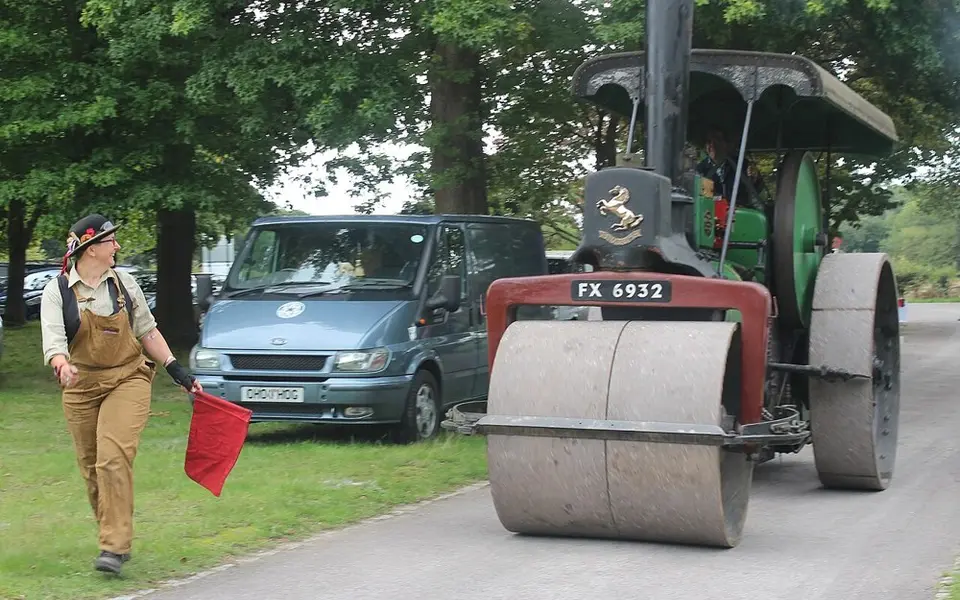
Britain's 1865 Red Flag Act held self-propelled vehicles to 4 mph, behind a man on foot with a red flag.
In 1865 Parliament passed the Locomotives Act, soon known as the Red Flag Act. It was aimed at steam road locomotives, machines up to 9 feet wide and 14 tons in weight that hauled wagons on public roads. Each one now needed a crew of three. One of them had to walk at least 60 yards ahead carrying a red flag, warn anyone riding or driving a horse, and signal the driver when to stop. In practice the flag carrier was usually a boy. The speed limit was 4 mph in the country and 2 mph in towns.
The worry was that the heavy engines would damage the roads and frighten horses. In 1878 an amending act dropped the red flag. The man on foot stayed, now at least 20 yards ahead, and so did the speed limits. Some county authorities kept the flag anyway through bylaws that went beyond their powers. West Sussex required a second flag carrier walking behind.
The first motor cars came under the same rules. The new motor industry lobbied Parliament hard for a change. Among the most active was Harry Lawson, a promoter who had bought the British rights to Daimler's engine patents in 1895. The Locomotives on Highways Act 1896 exempted vehicles under 3 tons. The crew of three, the man on foot and the 4 mph limit no longer applied to them, and their new speed limit was 14 mph.
Until then the old rules held. Two days before they were lifted, the Bollée brothers, who had brought their three-wheeled cars over for the celebrations, had to have them towed by horses from Victoria Station to Holborn.
Nike is named after the Greek goddess of what?
WhyThe brand takes its name from Nike, the winged Greek goddess of victory. Early employee Jeff Johnson suggested it in 1971, and Blue Ribbon Sports officially became Nike, Inc. in 1978.
On November 14, 1896, Lawson held a drive from London to Brighton to celebrate the new law and called it the Emancipation Run. It started with a breakfast at the Charing Cross Hotel, where Lord Winchilsea tore a red flag in two. The organizers made much of the red flag, although the law had stopped requiring it 18 years earlier.
The day was wet. The cars set off with an escort of cyclists, "probably 10,000" by one witness's count. Lawson also wanted publicity for his British Motor Syndicate and the patents it owned. His own commercial manager later doubted that two electric vehicles listed among the finishers had made the whole trip by road. He suspected they had gone by train.
The run was not held again until 1927. Since then it has taken place most years over the same course, organized by the Royal Automobile Club since 1930. Only cars built before 1905 may take part. The club says it is not a race, and drivers may not average more than 20 mph.