 TouchéGet the app
Lincoln's new beard pushed a printer into board games
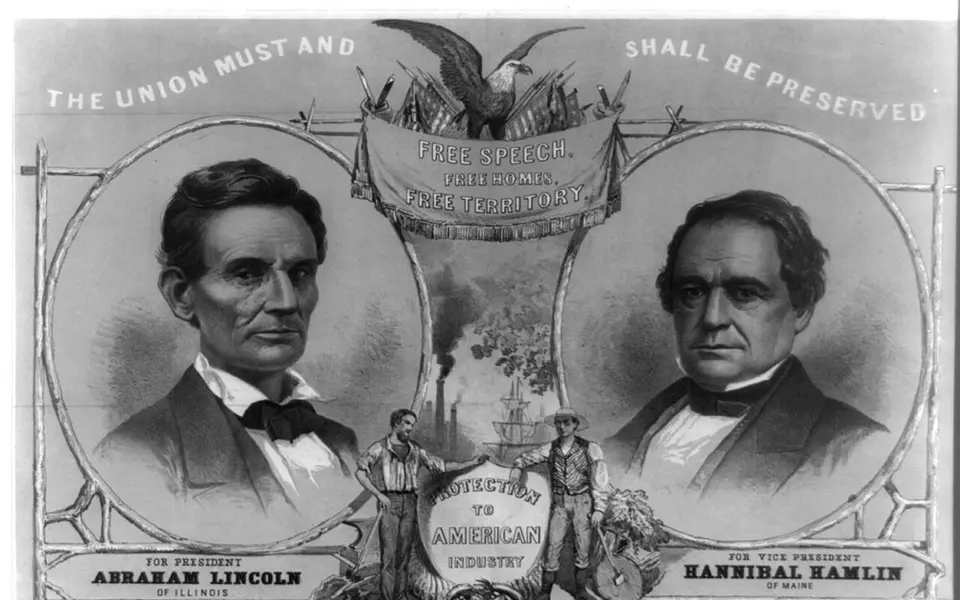
In 1860 Milton Bradley, a printer in Springfield, Massachusetts, sold a portrait of the Republican nominee Abraham Lincoln.
In 1860 Milton Bradley opened the first color lithography shop in Massachusetts, in Springfield. One of his first products was a portrait of the little-known Republican candidate for president, Abraham Lincoln. At first it sold well.
That October an 11-year-old in Westfield, New York, wrote Lincoln a letter. Grace Bedell's father had just come home from a fair with pictures of Lincoln and his running mate. She asked him to let his whiskers grow. "You would look a great deal better for your face is so thin," she wrote. All the ladies liked whiskers, she added, and they would tease their husbands into voting for him.
Lincoln wrote back on October 19 and promised nothing. He had never worn whiskers, and he asked whether people would not call it "a silly affectation" if he began now. Shortly afterward he let his beard grow. On his next visit to his barber he said, "Billy, let's give them a chance to grow." In February 1861, on the train journey to his inauguration, Lincoln stopped at Westfield and asked for Grace by name. She later recalled that he sat down with her on the edge of the platform and said, "Gracie, look at my whiskers. I have been growing them for you."
For Bradley the beard was a disaster. His portrait no longer looked like the man, and customers demanded their money back. The prints were worthless, and he burned what he had left.
In God of War, Kratos is a warrior from which Greek city-state?
WhyKratos is the Greek word for strength. The name came late in development, and the team did not know a god called Kratos already appears in Prometheus Bound.
Looking for another use for his press, he visited a friend, George Tapley, who challenged him to a board game, most likely an old English one. Bradley decided to make an American game of his own. In the winter of 1860 he brought out The Checkered Game of Life. The board looked like a checkerboard, and players worked their way from Infancy toward Happy Old Age. The squares stood for virtues and vices, from honor and bravery to disgrace and ruin, and even a square called Fat Office could lead to Prison. The first player to reach 100 points won. Players spun a six-sided top called a teetotum, because dice were associated with gambling.
Bradley sold the first few hundred copies himself on a two-day trip to New York. When the Civil War began in 1861, he saw bored soldiers stationed in Springfield. He made small game kits they could carry, with chess, checkers, backgammon, dominoes and his own game. They sold for a dollar each, and charities bought them in bulk to hand out.
The company he founded went on to make Candy Land, Operation and Battleship. In 1960, a hundred years after the first version, it brought out a new one, with a track, a spinning wheel and little plastic cars. It was called The Game of Life.