 TouchéGet the app
A gene that shapes our brains and hands is named after Sonic
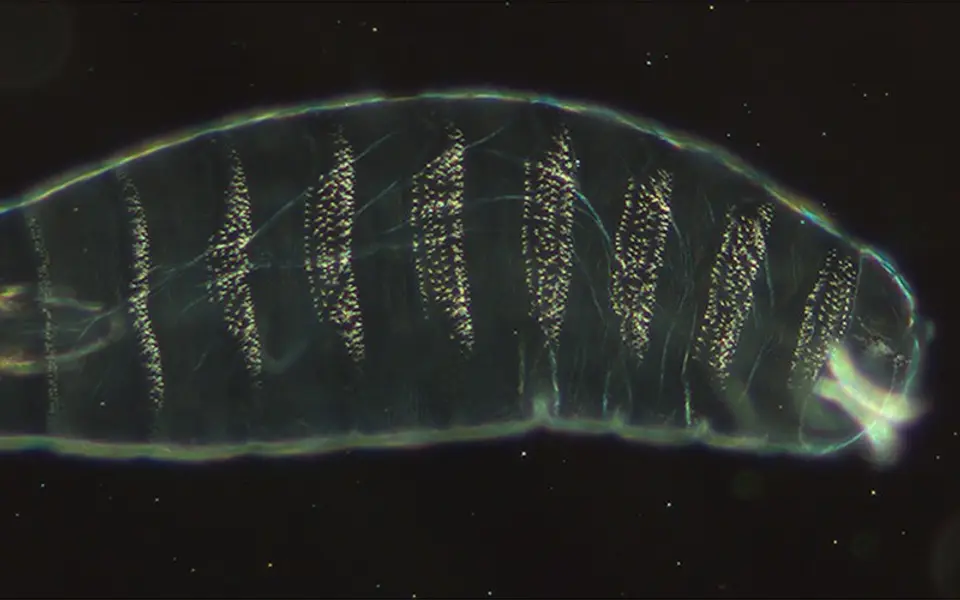
In 1980 two scientists in Heidelberg described a fruit fly gene whose mutant larvae were stubby and covered in tiny spikes, so it was called hedgehog.
In 1980 Christiane Nüsslein-Volhard and Eric Wieschaus, working in Heidelberg, published the results of a huge search for the genes that lay out a fruit fly's body. One mutant produced larvae that were short and stubby. Fly larvae carry tiny pointed bumps called denticles in a regular pattern, and these were covered in a solid lawn of them. They looked like hedgehogs, and the gene was named hedgehog. Nüsslein-Volhard and Wieschaus later shared a Nobel Prize for the work.
Vertebrates turned out to have three genes like it, found in the labs of Philip Ingham, Andrew McMahon and Clifford Tabin. Two were named after real species, desert hedgehog and Indian hedgehog. The third was named by Robert Riddle, a postdoctoral researcher in Tabin's lab at Harvard Medical School. His wife, Betsy Wilder, had come home with a magazine carrying an ad for the first Sonic the Hedgehog game. The gene became sonic hedgehog.
Zebrafish have extra copies, and they got names too. One was called tiggywinkle hedgehog, after Mrs. Tiggy-Winkle, a character in Beatrix Potter's books for children. Another was called echidna hedgehog, after the spiny anteater. That one was not named for Knuckles the Echidna, Sonic's rival in the games.
A Nintendo princess was named after the wife of which novelist?
WhyShigeru Miyamoto has said the name came from Zelda Fitzgerald, who by all accounts was a beautiful and well-known woman. He liked the sound of it, so he took the liberty of using it for the very first game.
Of the three, sonic hedgehog turned out to matter most. It works as a signal that spreads through the embryo, and cells respond differently depending on how much of it reaches them. It helps organize the brain and spinal cord, the limbs and fingers, the lungs and the teeth. Tabin's work on it and similar signals helped explain why the heart sits on the left side of the body, and why a thumb is different from a little finger.
The name became awkward. Mutations in the human gene can cause holoprosencephaly, in which the brain fails to divide into two halves, with severe defects of the brain, skull and face. Some doctors and scientists objected that telling a family about a mutation in sonic hedgehog sounded flippant. In 2006 a science reporter discussed the efforts to rename it with the head of the committee that names human genes. The name stayed. With patients, doctors usually use the abbreviation, SHH.
The joke spread anyway. A molecule that may block the hedgehog signal was named Robotnikinin, after Sonic's enemy, Dr. Robotnik. In 2008 researchers in Japan named a newly found protein in the retina pikachurin, after Pikachu, for its "lightning-fast moves."