 TouchéGet the app
Haydn's Farewell Symphony ends with the players walking out
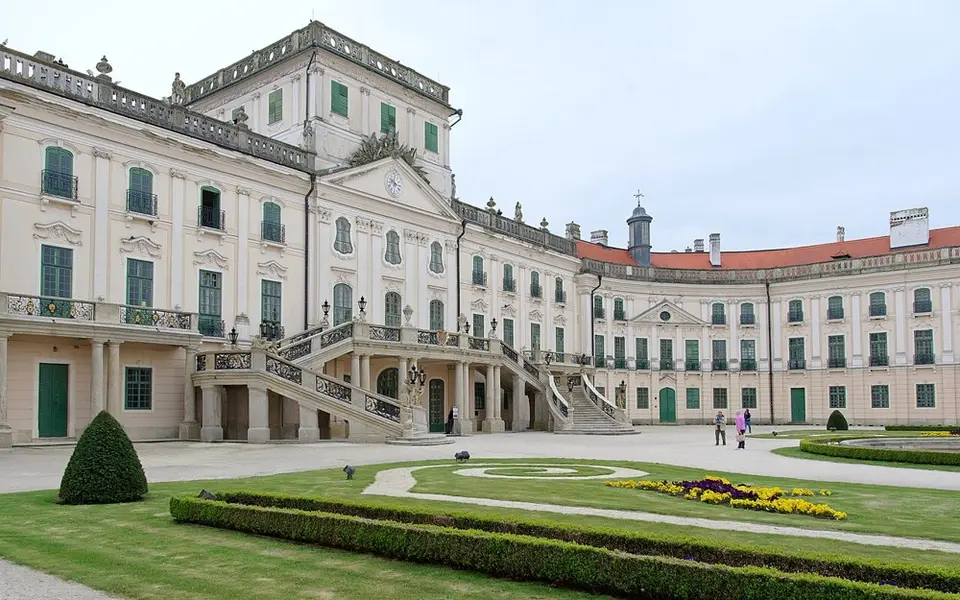
In 1772 Prince Nikolaus Esterházy kept his musicians at his summer palace in rural Hungary longer than anyone had expected. Their wives were a day's journey away.
In 1772 Prince Nikolaus Esterházy was staying at Eszterháza, his new summer palace in rural Hungary, with his household and all his musicians. The stay went on longer than expected. Most of the musicians had had to leave their wives at home in Eisenstadt, about a day's journey away.
The palace was isolated, and the musicians were lonely and bored. Their music director was Joseph Haydn. As an officer of the household, he wore the family's livery and went wherever the prince went. The players asked him for help. Rather than ask the prince directly, Haydn put the request into a symphony.
It is in F-sharp minor, an unusual choice. It appears to be the only known symphony from the 18th century in that key. The horns of the time had no valves. To change key, a player fitted extra lengths of tubing. This symphony could not be played without new equipment. On October 22, 1772, Haydn signed an order for two special slides that let the horns play a half step lower than usual. The order is still in the Esterházy archives.
The last movement starts fast and runs on to what sounds like the end of the piece. Then it breaks off, and a slow section begins. That was highly unusual in a symphony of the time, and it was probably a surprise to the prince.
Rihanna was born in which Caribbean country?
WhyAfter her 2005 audition, L.A. Reid told Jay-Z not to let her leave the building without a deal. She waited in Jay-Z's office while the lawyers drew up a six-album contract with Def Jam.
In that section the players leave in turn. Several get a short solo first. Each one then stops playing, snuffs out the candle on his music stand, and walks out. The first oboe and second horn go first. The bassoon, the second oboe and first horn, the double bass and the cello follow, then the orchestra's violins and the viola. The music gets thinner as each player leaves.
At the end only two muted violins are playing. Haydn himself played one, and his concertmaster, Luigi Tomasini, played the other.
Haydn told the story in old age to his two early biographers. The prince seems to have understood. The court went back to Eisenstadt the day after the performance.