 TouchéGet the app
Two astronauts reported a UFO, then played Jingle Bells
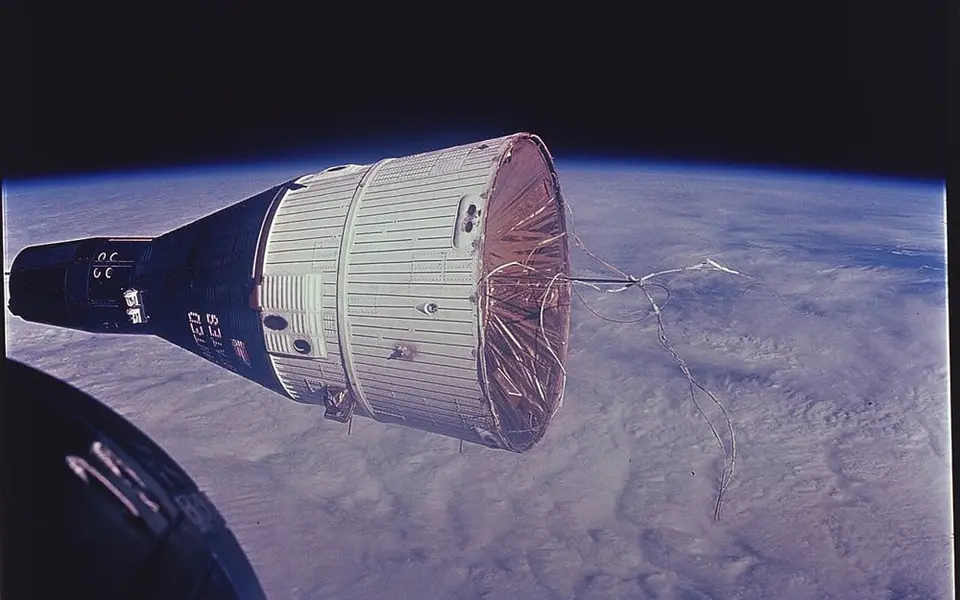
In December 1965 the crew of Gemini 6A radioed that an object was moving north to south in a polar orbit, very low, as if about to reenter.
On December 16, 1965, the two men aboard Gemini 6A radioed a sighting. An object was moving from north to south in a polar orbit, they said. It was very low and looked as if it might reenter soon.
Then the radio played Jingle Bells. Wally Schirra had a harmonica about an inch long, and Tom Stafford had a handful of small bells. Both had been smuggled aboard.
Gemini 6 was first meant to dock with an uncrewed Agena rocket in October. On October 25 Schirra and Stafford sat in their capsule while the Agena went up first. About six minutes into its flight it exploded.
NASA made a new plan. Gemini 7 was going up in early December for two weeks in orbit, and Gemini 6A would chase it. The two craft could not dock, but they could try to meet, which no crewed spacecraft had done.
Which singer had a 1999 hit with "Livin' la Vida Loca"?
WhyMartin's first English-language album nearly came out without this song. He has said it was finished only three days before he went into the studio with Madonna.
On December 12 the engines of 6A's rocket lit and then shut down after about a second and a half. A clock in the capsule had started as if the rocket had lifted off. The rules said Schirra must then pull a ring between his knees and fire both ejection seats. He felt no movement, judged that the rocket had not left the pad, and did not pull it. Ejecting would have wrecked the spacecraft and set the mission back by months. Engineers later found a plug that had fallen out and a plastic cover left in the rocket by mistake.
On December 15 they launched. Five hours in, Schirra saw a bright star he took for Sirius. It was Gemini 7. The two spacecraft came as close as one foot apart and flew together for about five hours. Schirra later said he flew rings around the other ship.
The sighting and the song came the next day, before they headed home. The harmonica was a Hohner "Little Lady." Schirra gave it to the Smithsonian in 1967, and the museum keeps it on display with the bells. It calls them the first musical instruments played in space.