 TouchéGet the app
This acacia was once called the most isolated tree on Earth
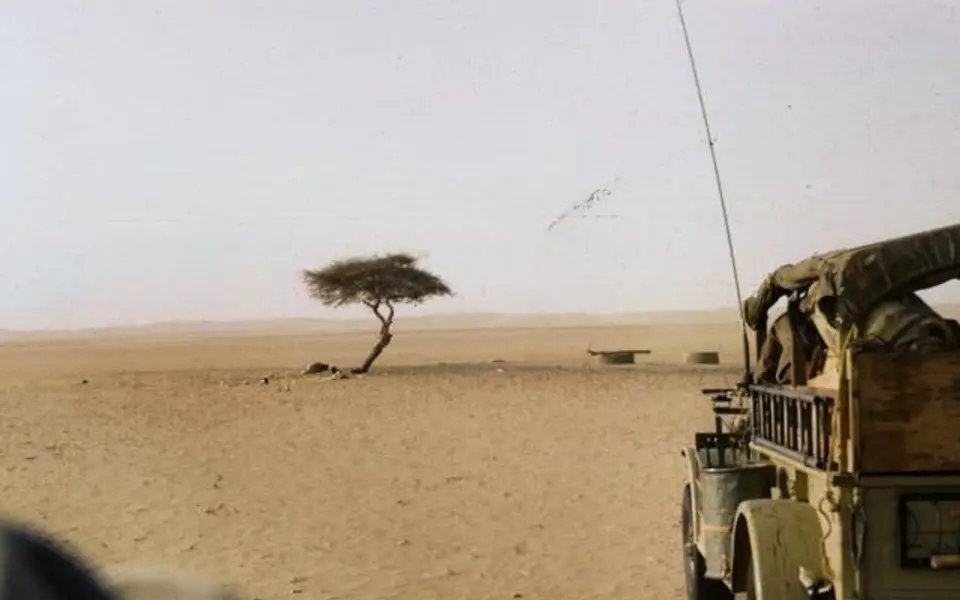
For about 300 years an acacia grew in the Ténéré, a part of the Sahara in Niger, and for decades it stood alone. Salt caravans steered by it, and nobody cut it for firewood.
In the winter of 1938-39, a well was dug next to a lone acacia in the Ténéré, a stretch of the Sahara in northeastern Niger. The diggers found that the tree's roots went down 108 to 118 feet, all the way to the water table.
The tree was the last of a group that had grown along the caravan route when the Sahara was less dry than it is today, and it had stood alone for decades. It marked the route of the salt caravans between Agadez and the oasis of Bilma. Every year the caravans gathered around it before setting out across the Ténéré. Going out it was the first landmark, and coming back it was the last.
In May 1939 an officer named Michel Lesourd saw it and could not see how it had survived. Camels trampled the ground all around it, yet none of them ate its leaves and thorns. The Tuareg who led the caravans needed fires to brew their tea, yet none of them cut its branches. His explanation was that the tree was taboo, under a tribal rule that everyone respected.
Niagara Falls is on the US border with which country?
WhyNiagara Falls is three waterfalls, and the biggest one, Horseshoe Falls, is mostly on the Canadian side. The falls move a few inches upstream every year from erosion. The best views are generally from Canada.
The French explorer Henri Lhote first reached the tree in 1934, on the first crossing by car between Djanet and Agadez. It had two trunks, green leaves and a few yellow flowers. When he came back in 1959, one trunk was gone, leaving a stump. A truck on its way to Bilma had hit it, though, as Lhote noted, it had enough room to go around. The sacred tree, he wrote, had been "the victim of a mechanic."
In 1973 the tree was knocked down, reportedly by a Libyan truck driver. Its remains were taken to the National Museum of Niger in Niamey, where they have a shelter of their own. A simple metal sculpture marks the place where it stood.
New trees were planted at the site. None survived. The well beside it is about 130 feet deep, and the travelers passing through watered them only now and then. Maps of the region still mark the spot.