 TouchéGet the app
Egypt and Sudan each insist this desert belongs to the other
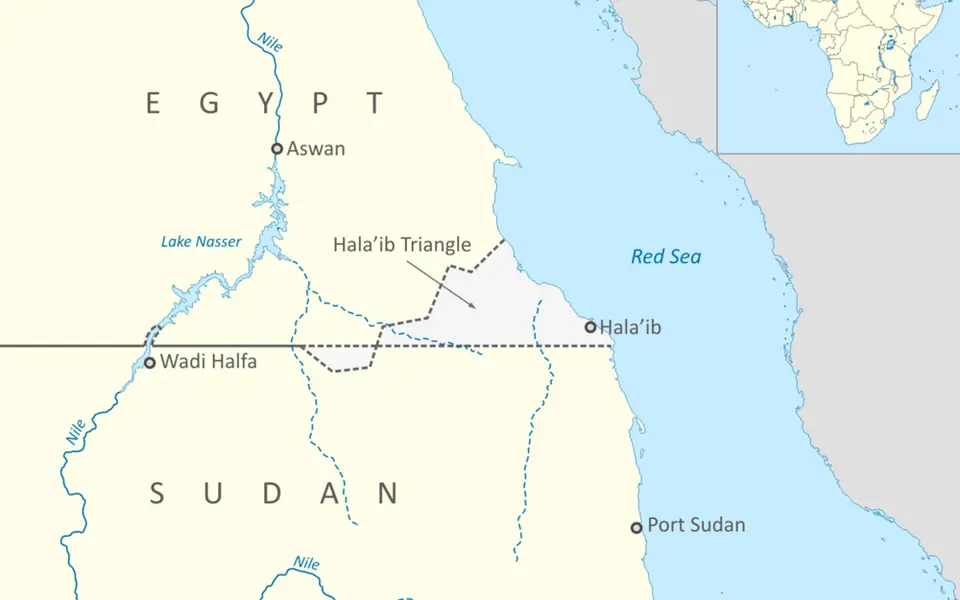
Bir Tawil is about 800 square miles of desert on the border between Egypt and Sudan. Neither country claims it.
In 1899 an agreement between Britain and Egypt set the border with Sudan as a straight line along the 22nd parallel.
Three years later Britain drew a second line, meant to follow who used the land. Just south of the parallel was a patch of grazing land used by a tribe based near Aswan, in Egypt, so that patch was handed to Egypt to run. Just north of it, on the Red Sea coast, was a much larger area whose people had closer ties to Khartoum. That went to Sudan.
For half a century it did not matter which line was the real one. Then, in 1956, Sudan became independent, and each country had to say where its border was.
Egypt said the straight line of 1899. Sudan said the crooked line of 1902. Each had picked the line that gave it the bigger piece, the Halaib Triangle, which has about 8,000 square miles, a coastline, towns, and some 27,000 people.
The smaller piece is Bir Tawil. It is a tenth the size. It has no coast and no surface water, and for most of the year the temperature can pass 104°F.
Which strait separates Alaska from Russia?
WhyVitus Bering was a Dane in the Russian navy, and he sailed into the strait in 1728. Scientists think that in the last ice age lower seas made it a land bridge, Beringia, and the first Americans crossed on it.
By Egypt's line, Bir Tawil is in Sudan. By Sudan's line, it is in Egypt. Neither country can claim it without accepting the other's line, and accepting the other's line means giving up Halaib.
So it sits there, the one habitable place on Earth that no recognized government claims.
Other people have been less shy. In 2014 a farmer from Virginia traveled there and declared the Kingdom of North Sudan, so that his daughter could be a princess. In 2017 an Indian businessman arrived in a rental car, planted sunflower seeds, and named himself King Suyash I. The next day a Russian DJ announced that the land was his, and that it was called the Kingdom of Middle Earth.
No government has recognized any of them. Neither have the people who are there. Nomads of the Ababda, the tribe whose grazing land this was in 1902, still cross it. They have said that visitors are mostly welcome, and that they are armed well enough to deal with anyone who tries to take over.