 TouchéGet the app
The likely designer of the US flag asked to be paid in wine
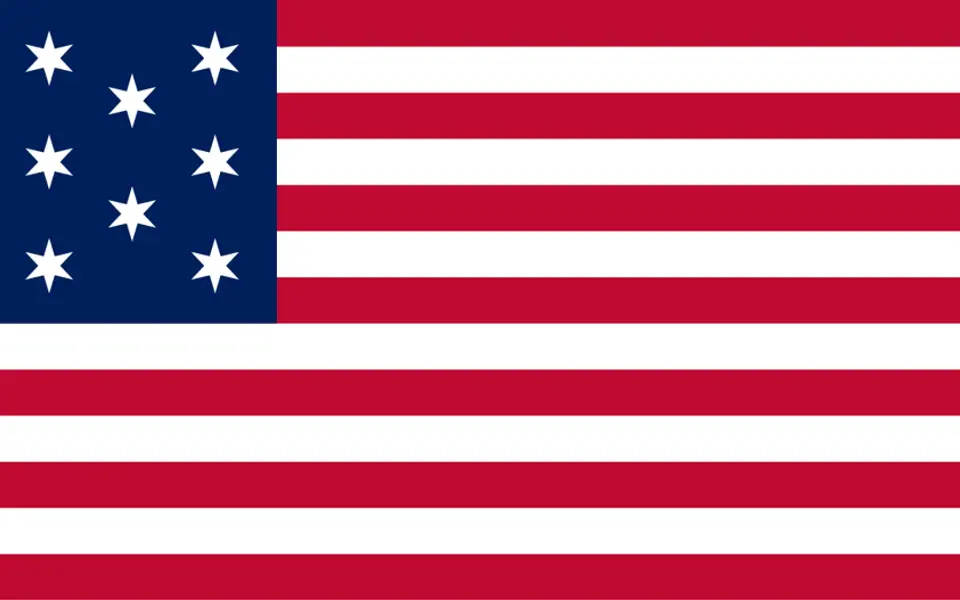
In 1780 Francis Hopkinson, a signer of the Declaration of Independence, told Congress he had designed the flag of the United States.
On May 25, 1780, Francis Hopkinson wrote to the Continental Board of Admiralty with a list of patriotic designs he had made over the previous three years. There was a seal for the Admiralty Board, a seal for the Treasury Board, designs for the Continental paper money, and "the Flag of the United States of America." He had not asked to be paid for any of it, he wrote. He would like a reward: "a Quarter Cask of the public Wine."
Hopkinson had signed the Declaration of Independence for New Jersey. When Congress adopted the Stars and Stripes on June 14, 1777, he was chairman of the Navy Board, which worked under the committee that wrote the flag resolution.
The board passed his letter on to Congress. In later bills Hopkinson asked for cash instead, £2,700 in all. The flag on those lists was a naval flag, priced at £9.
A report ordered by the auditor general found the bill reasonable and said it ought to be paid. The Treasury Board turned it down anyway, in October 1780. One of its reasons was that Hopkinson "was not the only person consulted" on these designs, so he could not claim all the credit or the full sum.
No sketch of his flag has ever been found. But the Journals of the Continental Congress record his claim, and he was the only person who claimed, in his own lifetime, to have designed the flag. Historians today accept him as a designer of it.
What bird appears on the flag of Mexico?
WhyA golden eagle stands on a cactus with a snake in its beak. Aztec legend says the gods told the people to build their city where they saw that exact scene. Guatemala's flag has a bird too, the quetzal.
Betsy Ross did make flags. She was a Philadelphia upholsterer who made flags, tents and uniforms during the war, and in May 1777 she was paid for making flags for Pennsylvania's navy.
Her story surfaced in 1870, 34 years after her death. Her grandson William Canby told the Historical Society of Pennsylvania that she had "made with her hands the first flag," which he said he had heard from his aunt in 1857. In his version, George Washington and two members of a congressional committee called on her in June 1776 with a sketch, and she talked them into five-pointed stars instead of six-pointed ones.
Nothing in Washington's diaries or the records of Congress supports it, and in 1872 the flag historian George Henry Preble questioned it in print. The story caught on anyway around the 1876 centennial.
In 1893 a painting of Ross with the flag on her lap, 9 by 12 feet, went on show at the world's fair in Chicago. In 1897 New York City's school board ordered framed prints of it for every school in its system. Its painter, Charles Weisgerber, sent prints to donors to a foundation for the Betsy Ross House, and in 1928 he was reported to have received donations from 4 million children and adults.