 TouchéGet the app
Bing Crosby taped his radio show on wartime German machines
In the 1940s American network radio wanted its music live, so Crosby did his show twice on the same day, once for each coast.
In the 1940s live music was the rule on American network radio. Bing Crosby did his show twice on the same day, three hours apart, once for the East Coast and once for the West.
He wanted to record it in advance and do it at his own convenience. NBC refused. The networks argued that listeners would not stand for "canned" radio. Crosby left NBC, and in October 1946 he opened a new show on ABC, a young network that agreed to let him record.
That first season went out on lacquer discs. Every edit on a disc cost some sound quality, and listeners complained that Crosby sounded tinny.
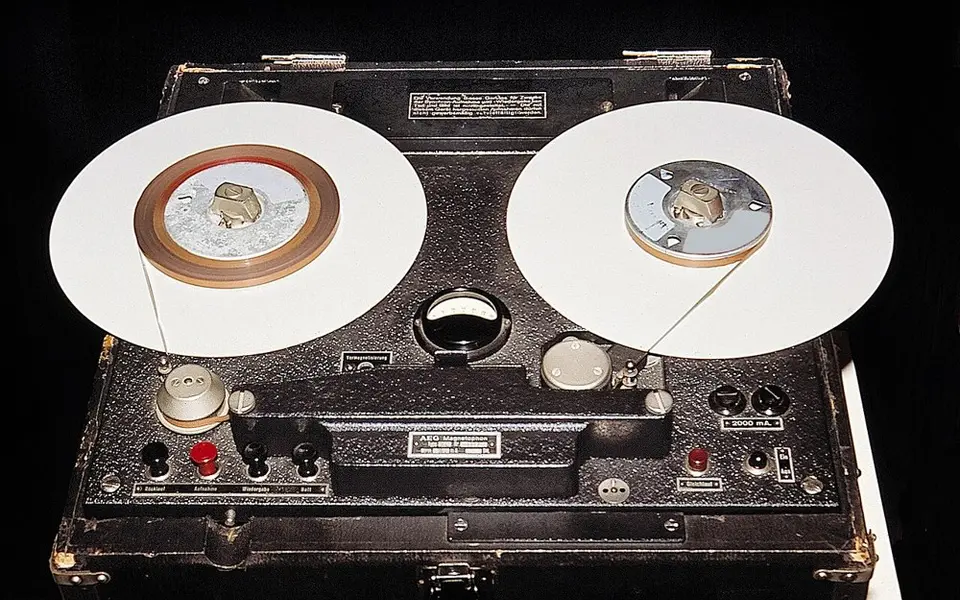
Jack Mullin had a better machine. He was an engineer in the US Army Signal Corps, sent at the end of the war to find out about German radio equipment. When he heard a German tape recorder, the Magnetophon, he could not tell whether it was live or playback. A radio station at Bad Nauheim gave him two suitcase-sized Magnetophons and 50 reels of tape, and he shipped them home.
Which singer starred in the 1984 film Purple Rain?
WhyPrince was named after his father's stage name. John Nelson, a pianist, performed as Prince Rogers with a group called the Prince Rogers Trio. As a boy Prince disliked the name and called himself Skipper.
In 1947 Mullin demonstrated them in Hollywood. Musicians played behind a curtain, then a hidden recording of them played, and many listeners could not tell the difference. Crosby's technical director was in the audience at MGM. From that fall, Crosby's show was recorded on tape.
Tape could be edited cleanly. Crosby recorded 35 to 40 minutes in front of an audience and cut it down to the half hour. Jokes that had fallen flat and songs that had gone wrong came out. His $50,000 helped Ampex, then a six-man company in California, build American recorders based on Mullin's machines.
Then the comedian Bob Burns came on the show and told some farm stories that were too racy for radio. The audience laughed and kept laughing, but the stories had to be cut. Crosby's writer Bill Morrow asked Mullin to save the laughter anyway. A couple of weeks later Morrow had a show that was not very funny, and he had Mullin put the saved laughs in. In Mullin's account, that was how the laugh track began.
Crosby also gave one of the first Ampex machines to his friend Les Paul, the guitarist. Paul fitted it with an extra playback head, so he could play along with a part he had already recorded and put both on a new track.