 TouchéGet the app
The Olympics once gave gold medals for poems and sculptures
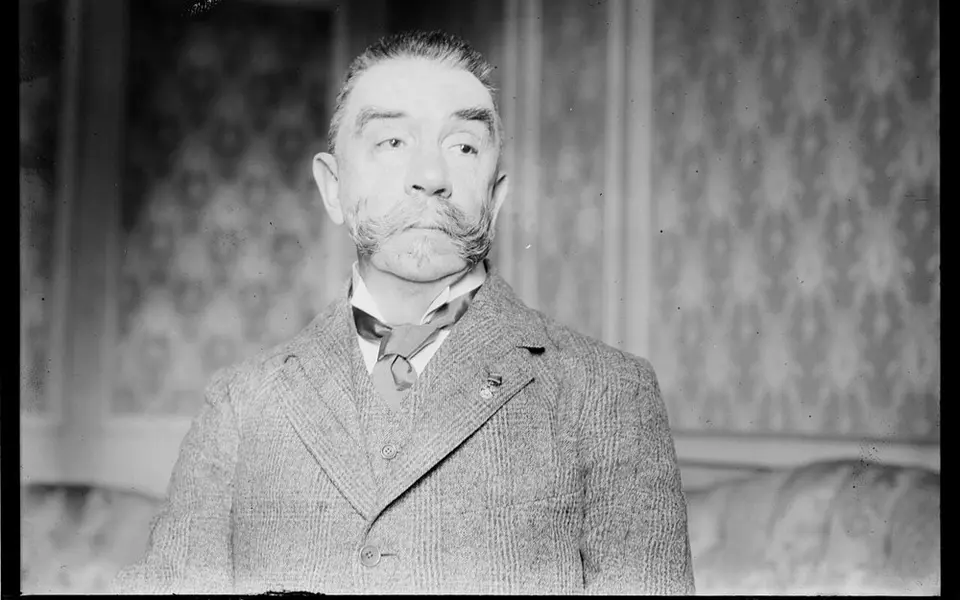
From 1912 to 1948, the Olympics awarded medals for architecture, literature, music, painting and sculpture, as long as the work was about sport.
At the 1912 Olympics in Stockholm, the gold medal for literature went to "Ode to Sport," by Georges Hohrod and Martin Eschbach, entered from Germany. Both names were pseudonyms. The poem was by Pierre de Coubertin, the Frenchman who had founded the modern Games and was president of the International Olympic Committee.
The art competitions were his idea. In 1904 he wrote in Le Figaro that at ancient Olympia the fine arts had been combined with the Games, and that it was time to restore them. In 1906 he gathered IOC members and artists' organizations in Paris, and they proposed medals in five fields: architecture, literature, music, painting and sculpture. Every entry had to be inspired by sport.
London was supposed to hold the first art contests in 1908. It had taken the Games over from Rome late, and the organizers decided that artists would not have time to send in work. In Stockholm the Swedes objected at first and then gave in. Only 35 artists are known to have entered.
The sculpture gold went to Walter Winans, an American living in England, for a sculpture called An American Trotter. At the same Games he won a silver medal in shooting, and four years earlier he had won a shooting gold. He is one of two people to win Olympic medals in both sport and art. The other is Alfréd Hajós of Hungary, who won two swimming golds in 1896 and, 28 years later, a silver for a stadium design.
How many gold medals did Michael Phelps win at Beijing 2008?
WhyEight golds in eight events, breaking Mark Spitz's record of seven from 1972. One of them came by a hundredth of a second in the 100-meter butterfly. Seven of the eight were world records.
The contests had trouble attracting well-known names. Coubertin later wrote that most writers were "wholly unfamiliar with the joys of violent muscular effort." At the 1924 Games in Paris, the judges included Selma Lagerlöf and Igor Stravinsky, and they were better known than the artists.
Paul Landowski won the sculpture gold in 1928 for a statue called The Boxer. The medal brought him commissions around the world, and he later worked on Christ the Redeemer in Rio de Janeiro.
The sticking point was amateurism. Olympic athletes had to be amateurs, but at Amsterdam in 1928 artists were allowed to sell their work when the exhibition closed. In 1949 a report to the IOC concluded that nearly all the art competitors were professionals, and that the contests should become an exhibition with no medals. No art medals were awarded after the London Games of 1948, and in 1954 the IOC voted to replace the contests with exhibitions.